
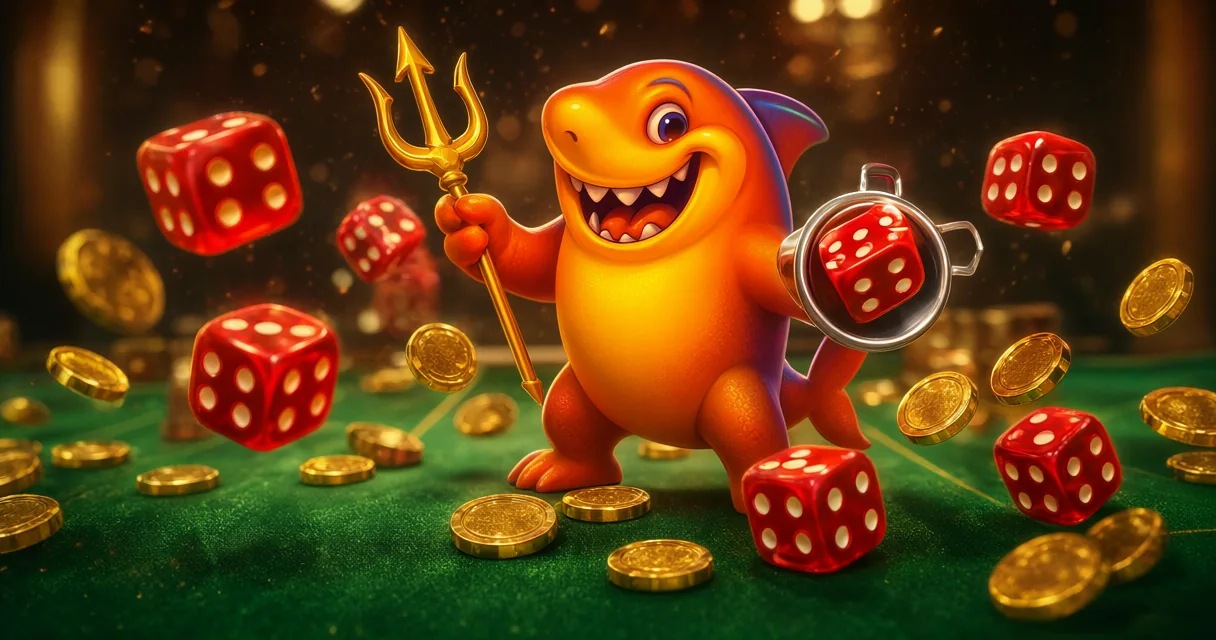
A simple set of dice has always been enough to shift the energy of a room. Growing up, family gatherings and dinners with friends often peaked when someone brought them out. I used to think of these small cubes merely as tools to guess winners or losers, but their history runs incredibly deep. Now, as part of the team at JILIKO, I see how that same primal excitement translates seamlessly to the modern casino floor.
Long before modern gaming facilities existed, people used the ankle bones of sheep or pigs to perform divination. The oldest known six-sided dice were unearthed from the Indus Valley civilization, dating back to around 2000 BC. Whether they were carved for the Senet board game of ancient Egypt, thrown in the street games of Rome, or placed in ancient Chinese tombs crafted from stone and ivory, these objects have remained a constant human companion. There is a quiet mathematical elegance to them as well—anyone who handles them often knows that the opposite faces of a standard standard die always add up to exactly seven.
In the Philippines, the traditional three-dice game is widely recognized and frequently played under the local name "hi-lo". At live table venues across Entertainment City in Parañaque, or inside the integrated gaming spaces in Clark and along Asean Avenue, Sic Bo commands strict attention. The mechanics are precise: round proceedings require the dice to be tumbled mechanically beneath a covered glass dome, keeping everything fair while players wait in suspense. Only after the dealer announces "No more bets" is the outcome finally revealed. You can wager on the total being big, small, odd, or even, but hitting a triple—where all three dice show the exact same number—always yields the highest payout.
This enduring regional appeal was clearly evident at the recent SiGMA Asia conference, held from June 2 to June 5 at the SMX Convention Centre in Pasay. The industry summit opened with cultural performances by the Sindaw Philippines Performing Arts Guild and featured addresses from PAGCOR Chairman Alejandro H. Tengco, Pasay Mayor Imelda Calixto-Rubiano, and PEZA Director General Tereso O. Panga. Operating from our own base at 925 Doroteo Jose Street in Santa Cruz, Manila, JILIKO was established in 2020 and proudly includes Sic Bo in our diverse gaming catalog.
While the casino version of Sic Bo is a game of pure chance and calculated odds, other variations turn the same small cubes into a tense psychological battleground. In games like Liar's Dice, players shake five dice secretly and take turns guessing the total count of a specific number across the entire table, calling out bluffs as the stakes rise. Both styles rely on the exact same fundamental tension, proving that whether you are reading the math or reading the room, dice games never lose their edge.
Quick Facts About Sic Bo in the Philippines
What is the local name for Sic Bo?
In the Philippines, the traditional three-dice game is widely recognized and played under the local name "hi-lo".
Where are live tables located in Metro Manila?
Physical gaming facilities along Asean Avenue in Tambo, Parañaque City, and throughout Entertainment City maintain dedicated tables for the game.
How are the dice rolled at professional venues?
Round proceedings require the dice to be tumbled mechanically beneath a covered glass dome before dealers announce the close of betting.
That mix of observation, precise timing, and pure chance is exactly what makes dice games endlessly replayable. Whether you appreciate the ancient roots of the game or the raw suspense of waiting for the glass dome to lift, the experience remains sharply engaging. If you are ready to test your own reads and predictions, JILIKO provides a direct platform to play Sic Bo and a wide variety of classic table titles.
Play Sic Bo at JILIKO Dragon Tiger: 4 Key Gameplay Differences from Baccarat
 Roulette Realities: The Double Zero and Why Betting Systems Fail
 5 Truths About Blackjack: From Holiday Tables to the Casino
 E-Sabong Myth vs. Reality: The Pause Behind the Digital Pit